
Summary
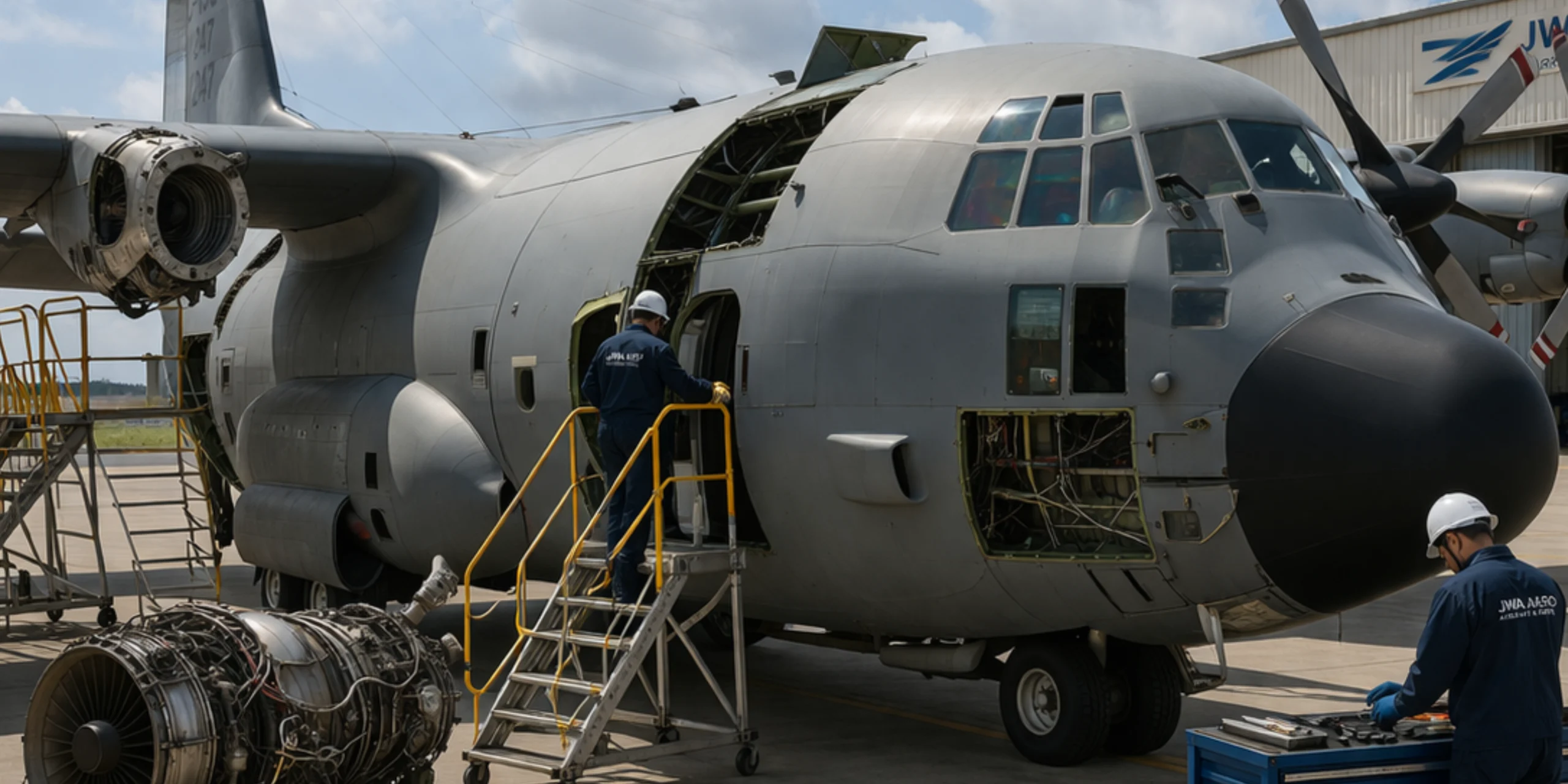
Aircraft teardown projects involve far more than the physical disassembly of components.
This article explores the operational factors that typically determine whether a project succeeds or fails — long before the technical removal phase even begins.
Topics covered:
- operational planning
- aircraft asset management
- traceability and documentation
- logistics and component preservation
- aftermarket analysis
- operational coordination in teardown projects
The aircraft has not yet been touched.
No tools in the hangar. No technicians in position. No components have been removed.
And the project may already be failing.
This is one of the least discussed realities of the aviation industry: most issues in aircraft teardown projects do not originate from the technical disassembly itself. They begin with the operational decisions made before the physical removal of components.
In many cases, teardown is only the visible step of a much larger operation involving logistics, documentation, asset management, regulatory compliance, and aftermarket strategy.
When these elements are not aligned from the start, the project begins losing value long before disassembly begins.
The Illusion of Simplicity
There is still a perception in the market that aircraft teardown is essentially a mechanical process.
Remove engines. Extract avionics. Disassemble the landing gear. Catalog the components.
But teardown projects are operationally much more complex than that.
Behind every recovered component there is a chain of processes involving:
- operational planning
- traceability control
- preservation procedures
- logistics coordination
- technical storage
- environmental management
- certification and documentation

The aviation industry depends on precision, organization, and reliable processes. Teardown projects follow exactly the same logic.
A component removed without proper documentation may lose market value. An engine preserved incorrectly may require additional inspections. A structure with no destination plan may generate significant logistical and environmental costs.
In practice, teardown does not mean simply disassembling an aircraft.
It means managing an aviation asset throughout its entire operational transition.
Where Projects Actually Fail
1. Absence of a Clear Strategy for Component Management
One of the most common mistakes in teardown projects happens before operations even start: the absence of a clear strategy for how the aircraft and its components will be managed throughout the project.
Not every project has the same objective.
Some prioritize:
- maximum component availability
- execution speed
- immediate aftermarket demand
- inventory positioning
- strategic component sourcing
- logistical removal of aircraft no longer in operation
Without a defined strategy, decisions become reactive instead of coordinated.
This typically leads to situations such as:
- prioritization of components with low demand
- inadequate preservation of high-value parts
- inconsistencies in documentation flows
- increased logistics costs during the project
- storage and distribution issues
In aviation asset management, teardown efficiency is directly linked to the quality of the planning done before disassembly begins.
2. Underestimating Documentation and Traceability
In aircraft teardown operations, documentation is not administrative support.
It is part of the asset itself.
Traceability is what determines whether a component can return to the market, move across jurisdictions, pass technical inspections, and preserve commercial value.
Maintenance history, removal records, certification status, and preservation procedures directly influence whether an aircraft component can be reused.
Fragmented records create operational risks across the entire aviation chain.
Within the global market for aircraft components, documentation failures can lead to:
- delays in transactions
- requirements for additional inspections
- regulatory restrictions
- reduction in commercial value
- operational uncertainty for buyers and operators

For this reason, the documentation structure of a project must exist before physical disassembly begins — not after components have already been removed.
Removal, preservation, and inventory management processes must operate within the same traceability framework.
3. Choosing the Wrong Operational Structure
Teardown projects depend directly on the operational structure involved.
Physical disassembly capability, on its own, is not enough.
Well-executed projects require coordination between:
- certified technical teams
- logistics operations
- component preservation
- inventory management
- environmental management
- technical transportation
- component distribution
Large aircraft structures cannot simply remain in storage indefinitely after disassembly.
Residual materials, fluids, structural sections, and components without further use require planning for transportation, storage, recycling, or responsible disposal.
Environmental responsibility has also become an increasingly relevant variable within the aviation industry, especially regarding the handling of fuels, oils, hydraulic fluids, and contaminating materials.
Without proper planning, these variables quickly turn into operational liabilities.
Teardown projects require operational management from start to finish — not only during component removal.
4. Ignoring the Market Before Disassembly
The aircraft components market changes constantly.
Demand for certain items can vary according to:
- fleet retirements
- maintenance cycles
- aircraft utilization
- regional demand
- logistics availability
- regulatory requirements
A teardown project disconnected from market analysis may end up handling components with low liquidity while overlooking higher-value opportunities in the aftermarket.
Timing matters.
By the time a component is finally removed, inspected, preserved, and ready for distribution, the market may already look different from the moment the decision to disassemble the aircraft was made.
Experienced projects typically include:
- demand evaluation
- aftermarket analysis
- inventory positioning
- buyer profiling
- logistics planning for distribution
Commercial strategy must exist before the first component is removed — not after teardown is finished.
What a Well-Structured Teardown Plan Looks Like
Well-executed projects usually begin weeks or months before operations start.
The process typically involves:
- review of the aircraft’s maintenance history
- technical evaluation of components
- traceability review
- operational planning
- logistics coordination
- definition of the structural destination
- preservation procedures
- storage preparation
- market analysis for the components handled
None of these steps are highly visible to anyone observing the final result.
But all of them directly influence whether the project will preserve value or lose efficiency throughout execution.
In the aviation industry, successful teardown operations are rarely the result of improvisation.
They are the result of preparation.
Conclusion
Aircraft teardown projects are often perceived as technical disassembly operations.
In practice, they are complex aviation asset management projects involving operational coordination, traceability, logistics, environmental responsibility, and aftermarket strategy.
Physical component removal is only one stage of a much larger process.
At JWA Aero, projects are conducted considering not only component handling, but also preservation, logistics, documentation, operational management, and the destination of the structure after disassembly.
Because, in aviation, the value of an aircraft is not defined only during teardown.
It is defined by the quality of the decisions made before the work even begins.
References
Industry reports on aftermarket and aviation component traceability. 2024–2025.
Operational studies on teardown and aviation asset management.
JWA Aero
Excellence in parts and solutions.